

1. Why Vancouver Is Worth the Trip

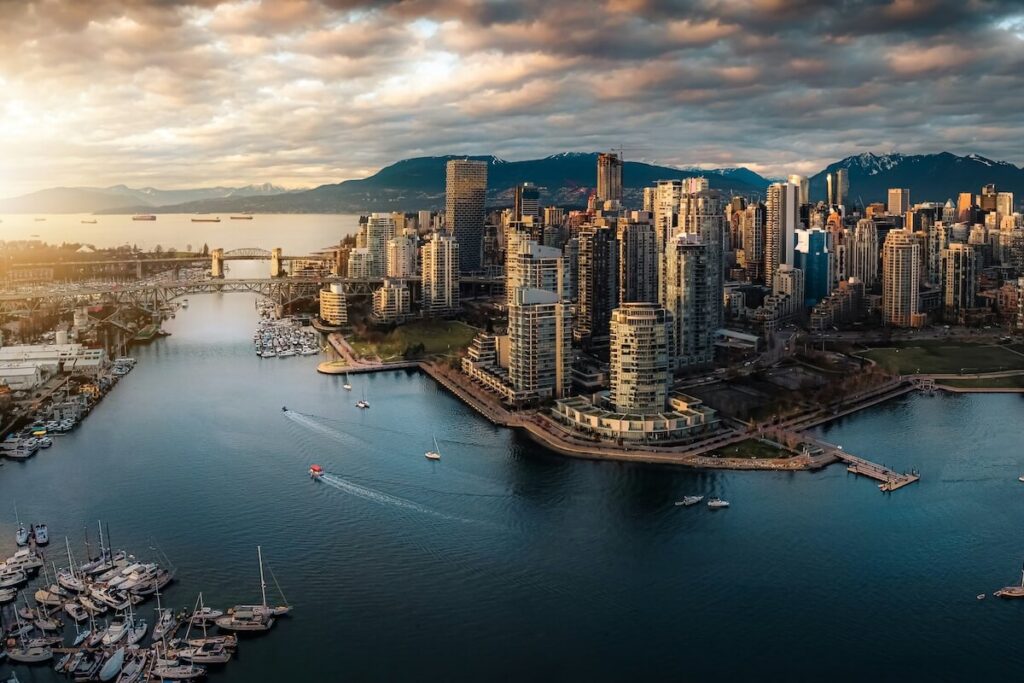
Vancouver is consistently ranked among the most liveable cities in the world, and the reason is obvious from day one of a visit. The setting alone — ocean on three sides, the Coast Mountains as a backdrop, Stanley Park within walking distance of downtown — makes it visually unlike most major cities. What makes it genuinely worth the trip is the combination of world-class food, accessible outdoor adventure, and a cosmopolitan energy driven by one of the most culturally diverse urban populations in North America.
2. Getting to Vancouver
By Air
Vancouver International Airport (YVR) handles direct flights from most major North American cities and international hubs in Europe, Asia, and Australia. It consistently ranks among the best airports in North America for transit experience.
From YVR to downtown, the Canada Line SkyTrain is the fastest and most cost-effective option — roughly 25 minutes to Waterfront Station in the city centre. Taxis and rideshares are available from the ground transportation level.
Getting Around the City
Vancouver’s public transit system — managed by TransLink — covers buses, the SkyTrain rapid transit network, the SeaBus ferry across Burrard Inlet to North Vancouver, and the West Coast Express commuter rail. A reloadable Compass Card, available at any SkyTrain station, is the most efficient way to pay across all modes.
For reaching Granville Island specifically, the Aquabus and Granville Island Ferries run small passenger ferries across False Creek from downtown and the Yaletown waterfront — a scenic and practical option that avoids parking entirely. TransLink integrates easily with cycling: Vancouver’s dedicated cycling routes and the Mobi bike share network allow you to combine transit and pedalling in a single trip. For day trips to Whistler, the Fraser Valley, or Victoria, renting a car is worthwhile. For city travel, transit and rideshare cover everything you need.
3. When to Visit Vancouver
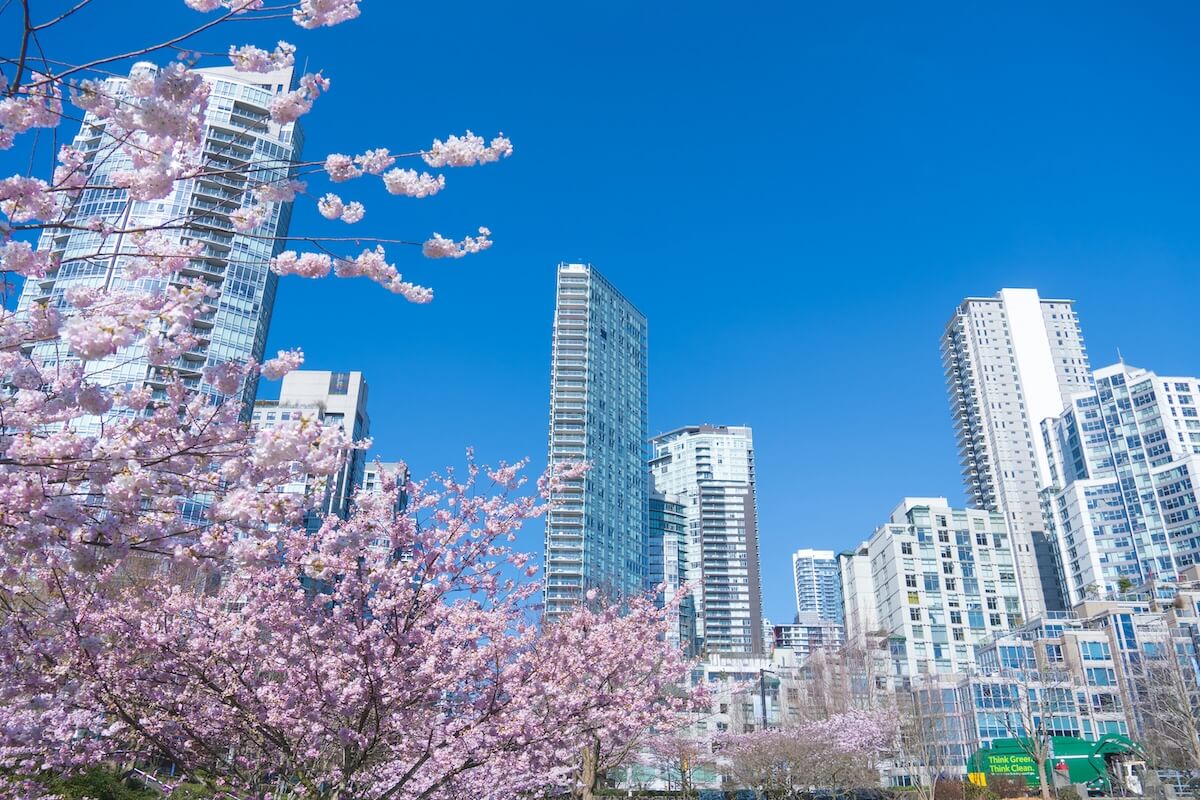
Vancouver’s climate is mild by Canadian standards, but each season has a meaningfully different character.
Spring (March to May) is arguably the most photogenic window. Cherry blossoms blanket the city in late March and April — tens of thousands of trees across parks, residential streets, and the UBC campus. Temperatures are comfortable for walking and hiking, whale-watching season begins, and peak-season crowds have not yet arrived.
Summer (June to September) is peak season for good reason. Long days, warm temperatures typically between 18–25°C, outdoor markets in full swing, and full access to beaches, kayaking, and open-air dining. July and August see the most visitors; early June or September offer similar conditions with fewer crowds.
Autumn (October to November) brings cooler temperatures, dramatic foliage in the parks and North Shore mountains, and a quieter city. An excellent season for hiking, cycling the seawall, and dining without waiting for a table.
Winter (December to February) is Vancouver’s rainy season at sea level — but the mountains see excellent snow. Grouse Mountain and Cypress Mountain offer skiing and snowboarding within 30 to 45 minutes of downtown. Dine Out Vancouver, Canada’s largest food festival, runs for approximately three weeks across January and February, making this one of the best times of year for culinary visitors specifically.
4. Parks and Beaches

The City of Vancouver maintains three destination parks — each genuinely worth a half-day — alongside eight ocean-side beaches and one freshwater lake. These are not background scenery; they are the core of how the city lives and one of the primary reasons to visit.
Stanley Park
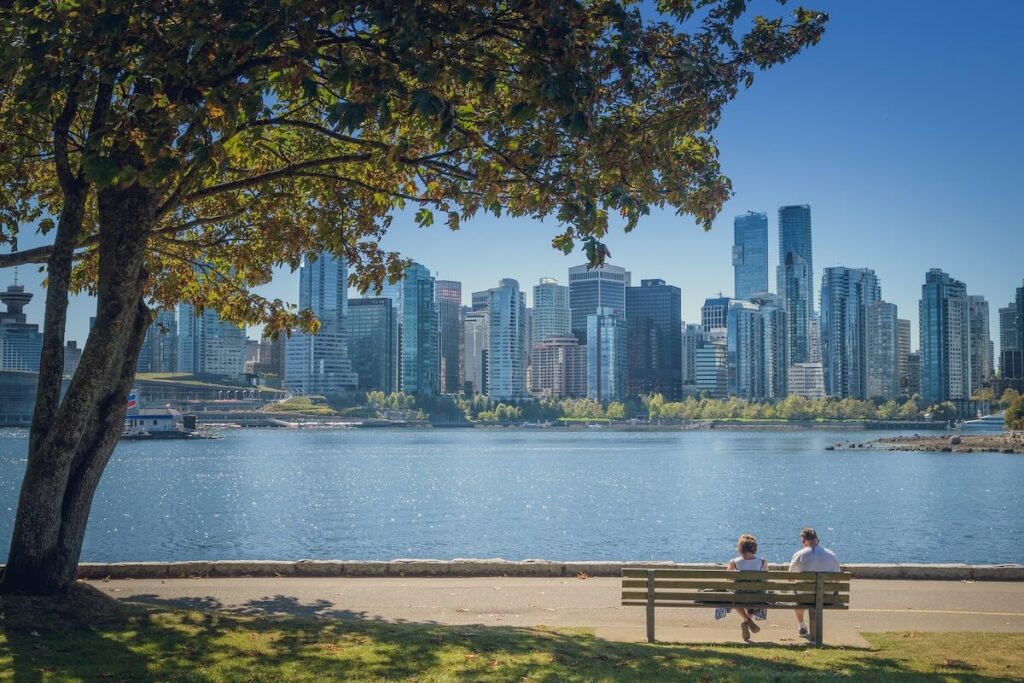
Stanley Park is Vancouver’s most beloved landmark and one of the finest urban parks anywhere in the world. At 400 hectares of natural West Coast rainforest on the tip of the downtown peninsula, the park has been welcoming visitors since 1888 and now draws around 8 million visitors annually. Inside: 8.8 kilometres of seawall, over 27 kilometres of forest trails, free rhododendron and rose gardens, Second and Third Beach, the Brockton Point Totem Poles, the Vancouver Aquarium, pitch and putt, tennis, and the Stanley Park Train. Free to enter and open daily from 6am to 10pm.
Insider tip: Arrive early. By mid-morning in summer the main paths are busy. An early start gives you the park largely to yourself — and the morning light on the water and mountains is exceptional.
Queen Elizabeth Park
Queen Elizabeth Park sits at Vancouver’s highest point and delivers panoramic views of the city skyline and the North Shore mountains that rival any viewpoint in the city. The grounds include a free rose garden and landscaped quarry garden, an arboretum of exotic and native trees, scattered sculptures, and Bloedel Conservatory — a paid-entry indoor tropical dome housing over 500 exotic plants and more than 200 free-flying exotic birds across three distinct climate zones. Pitch and putt, tennis, lawn bowling, and disc golf are also available.
Hastings Park
One of Vancouver’s largest urban parks, Hastings Park in the city’s east end combines recreation, nature, and entertainment. The park features Italian and Japanese-styled gardens, trails connected to the city’s cycling network, two skateparks, and parkour and track-and-field facilities. It is also home to Hastings Racecourse and the site of the Pacific National Exhibition — one of Western Canada’s largest annual events, held each August.
Vancouver’s Beaches
The city maintains eight ocean-side beaches. English Bay Beach in the West End is the most central — the stretch of sand and waterfront promenade is one of Vancouver’s most iconic settings, particularly at sunset. Kitsilano Beach on the south shore offers a large outdoor saltwater pool alongside the sand. Locarno Beach and Spanish Banks further west are quieter and better for picnicking. Wreck Beach, beneath the UBC cliffs, is clothing-optional and one of the most atmospheric in the city.
5. Top Attractions & Neighbourhoods in Vancouver
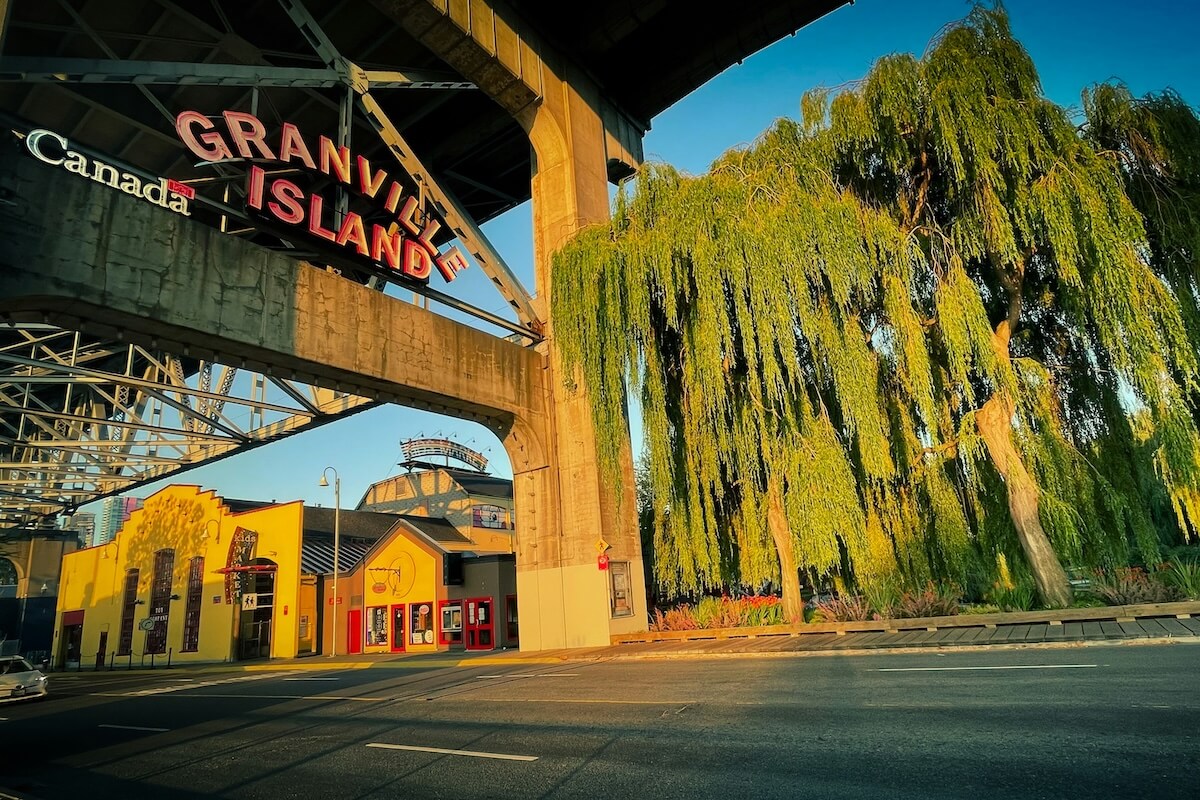
The Seawall
Vancouver’s Seawall is the world’s longest uninterrupted waterfront path, extending from the Vancouver Convention Centre along Coal Harbour, around Stanley Park, through Kitsilano, past Vanier Park and Granville Island, and all the way to Spanish Banks Park. The total route exceeds 22 kilometres. The path is divided into two clearly marked sections: the outer path (closest to the water) for walkers and joggers, and the inner path for cyclists and inline skaters. Follow the signs — the division is taken seriously during busy periods. Bike rentals, including electric options, are available at multiple points along the route, and TransLink integrates easily with cycling, making it simple to combine a SkyTrain or SeaBus ride with a stretch on two wheels via the Mobi bike share network. The Stanley Park seawall loop alone takes two to three hours on foot and is the single experience most consistently recommended by locals and visitors alike.
Granville Island
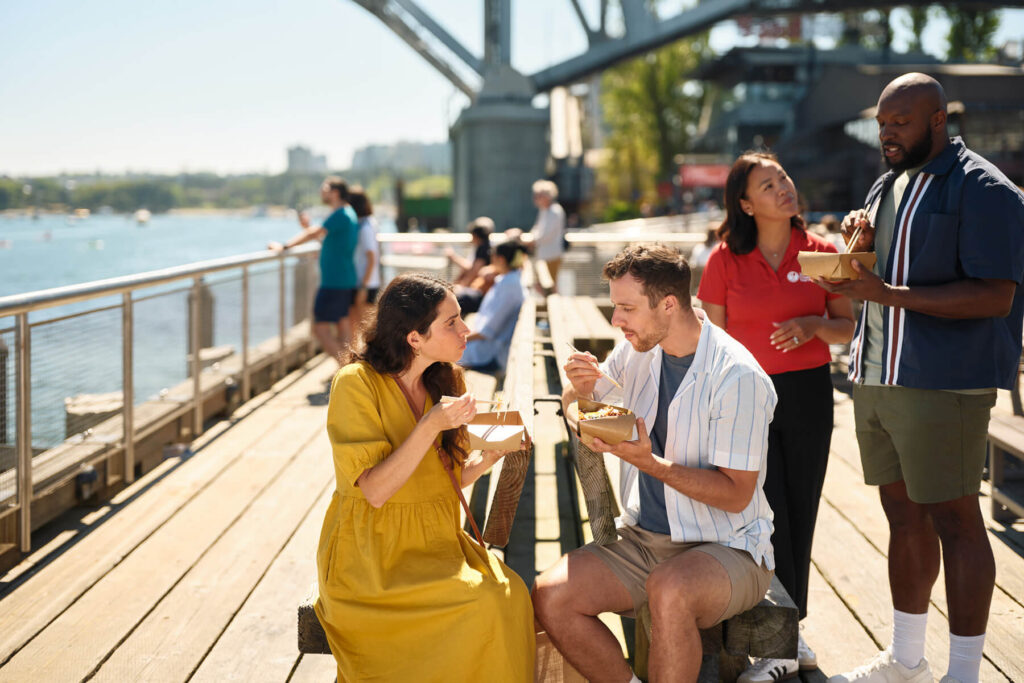
A former industrial peninsula converted into one of Vancouver’s most beloved destinations, Granville Island sits just south of downtown across False Creek. The Public Market at its core is one of the top three most-visited destinations in all of Canada — a permanent indoor market of artisan vendors, fishmongers, cheese producers, bakeries, BC honey and jam producers, and fresh produce stalls. Beyond the market: independent theatres, artist studios, a craft brewery, the only sake distillery in Canada, and waterfront restaurants. Open daily from 9am to 7pm. Plan two to three hours minimum. For the full rundown of Vancouver’s must-see stops beyond this list, see our top 10 things to do in Vancouver.
Capilano Suspension Bridge Park
Dating to 1889 — making it Vancouver’s oldest tourist attraction — the Capilano Suspension Bridge spans 140 metres across a canyon 70 metres above the Capilano River. The park also includes Cliffwalk (cantilevered walkways along the granite cliff face) and Treetops Adventure (suspension bridges through old-growth forest). In 2026, a new Totem Talks guided tour has been added, explaining the cultural significance of the park’s First Nations totem poles — included with admission. Around 800,000 people visit annually. Allow two to three hours; book timed entry in advance during summer.
Budget tip: Lynn Canyon Park in North Vancouver offers a free suspension bridge and forested trails as a genuinely worthwhile alternative.
Gastown
Vancouver’s oldest neighbourhood runs along Water Street from the Waterfront SkyTrain station. The cobblestone grid of heritage buildings, cocktail bars, boutique shops, and chef-driven restaurants makes it one of the city’s most walkable evening destinations. The steam-powered clock at Water and Cambie — one of the only functioning steam clocks in the world, chiming on the quarter hour — is a charming landmark. The real value is in exploring the neighbourhood’s food and bar culture beyond the clock itself.
For the full rundown of Vancouver’s must-see stops beyond this list, see our top 10 things to do in Vancouver.
Chinatown
With origins dating to 1886, Vancouver’s Chinatown is the largest in Canada and one of the most historically significant in North America. The streets are dense with cultural architecture, painted murals, and independent food businesses that have operated for generations. The Dr. Sun Yat-Sen Classical Chinese Garden is the standout attraction — an authentic Ming Dynasty-era scholar’s garden, the first of its kind built outside of China, with winding paths, lily-covered ponds, and a pagoda in a tranquil courtyard. Plan at least half a day; a guided cultural walking tour unlocks stories and spaces that are inaccessible independently.
Museum of Anthropology at UBC
Located on the University of British Columbia campus with sweeping views of the Strait of Georgia, the Museum of Anthropology holds one of the world’s most significant collections of Northwest Coast Indigenous art and cultural objects. The Great Hall houses monumental carved works including house posts, memorial poles, and ocean-going canoes. The building itself — designed by Arthur Erickson — is worth the journey. Allow two hours; combine with a walk along the UBC foreshore.
VanDusen Botanical Garden
A 55-acre oasis in the Shaughnessy neighbourhood, VanDusen Botanical Garden is home to more than 7,500 plant species from around the world, a whimsical Elizabethan hedge maze, and sculptures by artists including Bill Reid, David Marshall, and Sebastian. Cart tours are available for visitors with mobility concerns. Visit in spring for cherry blossoms, in summer for full bloom, or in autumn for fiery foliage. The Festival of Lights in December transforms the garden into one of the most atmospheric seasonal events in the city.
Free Gardens Worth Noting
Not every garden in Vancouver comes with an admission fee. The Ted and Mary Grieg Rhododendron Garden and Rose Garden in Stanley Park are both free to enter and spectacular in spring. The Quarry Gardens and Rose Garden in Queen Elizabeth Park are similarly free. For visitors who want the botanical experience without the entry cost of VanDusen or Bloedel Conservatory, these are genuinely worthwhile alternatives.
Downtown and Coal Harbour is the most convenient base for first-time visitors. Walkable to Gastown, Stanley Park, the Convention Centre, and the Canada Line. Robson Street — Vancouver’s main retail corridor — runs through the centre of it.
Yaletown is a former warehouse district converted into a neighbourhood of restaurants, design shops, and residential lofts. The seawall runs along its waterfront edge directly to Granville Island. Good for dinner and an evening walk; strong for cocktail bars and Pacific Northwest cuisine.
Kitsilano (Kits) is a residential neighbourhood along the south shore of English Bay with a beach, a large outdoor saltwater pool, and some of Vancouver’s most established independent restaurants and cafés. Unhurried and local in feel — worth a half-day.
Commercial Drive is Vancouver’s most eclectic neighbourhood, with Italian roots, a strong independent food and café culture, and a mix of vintage shops, bookstores, and live music venues.
Main Street (Mount Pleasant) has become one of the city’s most interesting food and retail corridors, with a concentration of chef-driven restaurants, independent cafés, and craft breweries between 10th and 33rd Avenues. The neighbourhood is nicknamed “Yeast Van” for its density of brewing operations.
Richmond is worth the 20-minute SkyTrain ride south of downtown. One of the most significant concentrations of authentic Chinese, Japanese, and Southeast Asian cuisine in North America. The Aberdeen Night Market — the largest night market in North America — runs weekends from May to October with dozens of food vendors, live performances, and independent stalls.
6. Food and Culinary Experiences in Vancouver
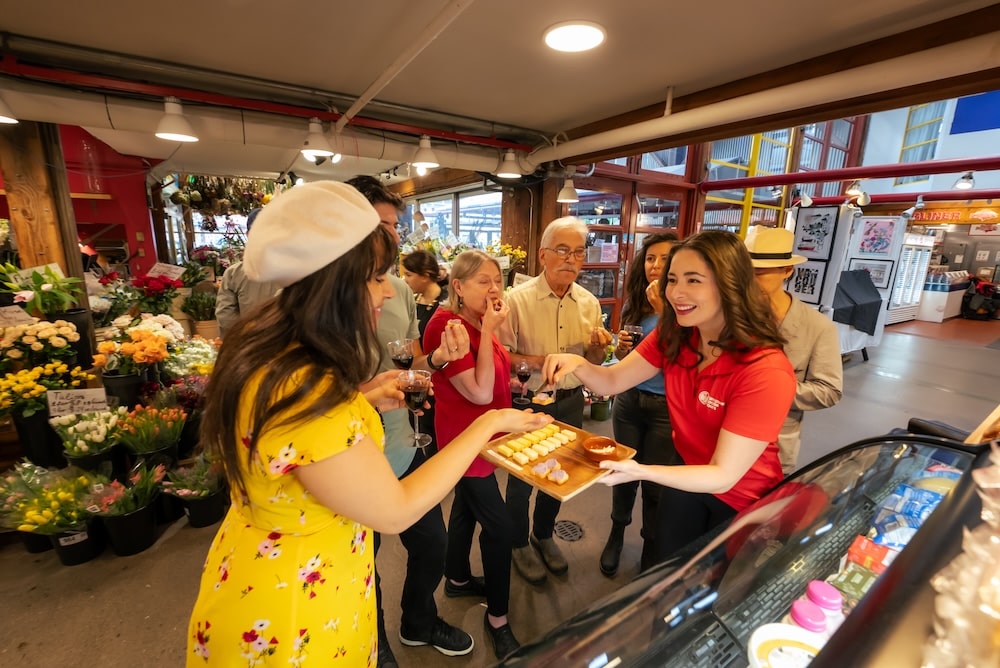
This is where Vancouver genuinely earns its reputation as one of the best food cities in the world. The combination of Pacific Northwest ingredients — wild salmon, Dungeness crab, local oysters, BC tree fruits, and Fraser Valley produce — with the culinary traditions of an exceptionally diverse immigrant population has produced a food scene that is both deeply local and internationally acclaimed. Condé Nast Traveler has called Vancouver home to the best Chinese food in the entire world. The city has approximately 600 sushi restaurants — roughly double the number in Los Angeles.
Here is how to eat well in Vancouver, from the most structured to the most independent.
Vancouver Foodie Tours — The Best Starting Point for Culinary Visitors
If you only plan one structured food experience in Vancouver, make it this one. Vancouver Foodie Tours has been running guided culinary experiences since 2010 and has hosted over 75,000 guests. The company holds Forbes recognition as one of the world’s top city tours and TripAdvisor’s number one food tour in Vancouver — a consistent quality standard that most tour operators do not sustain at scale.
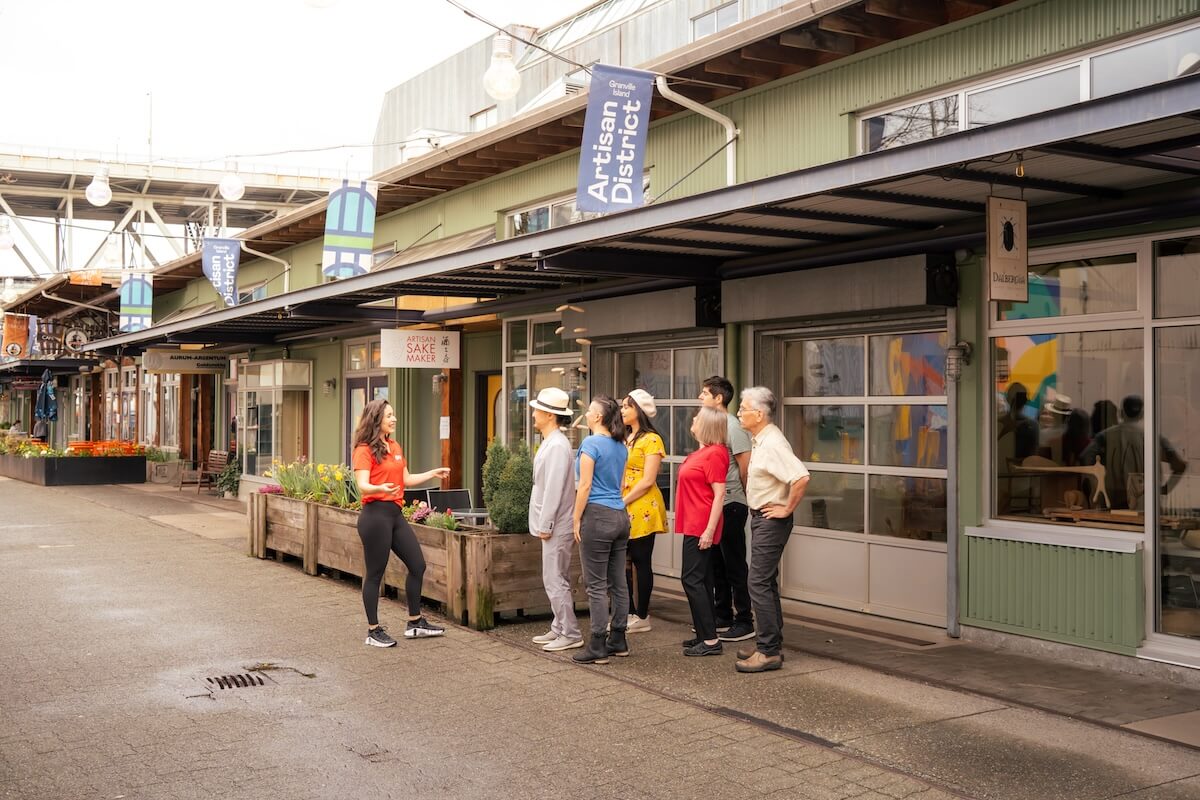
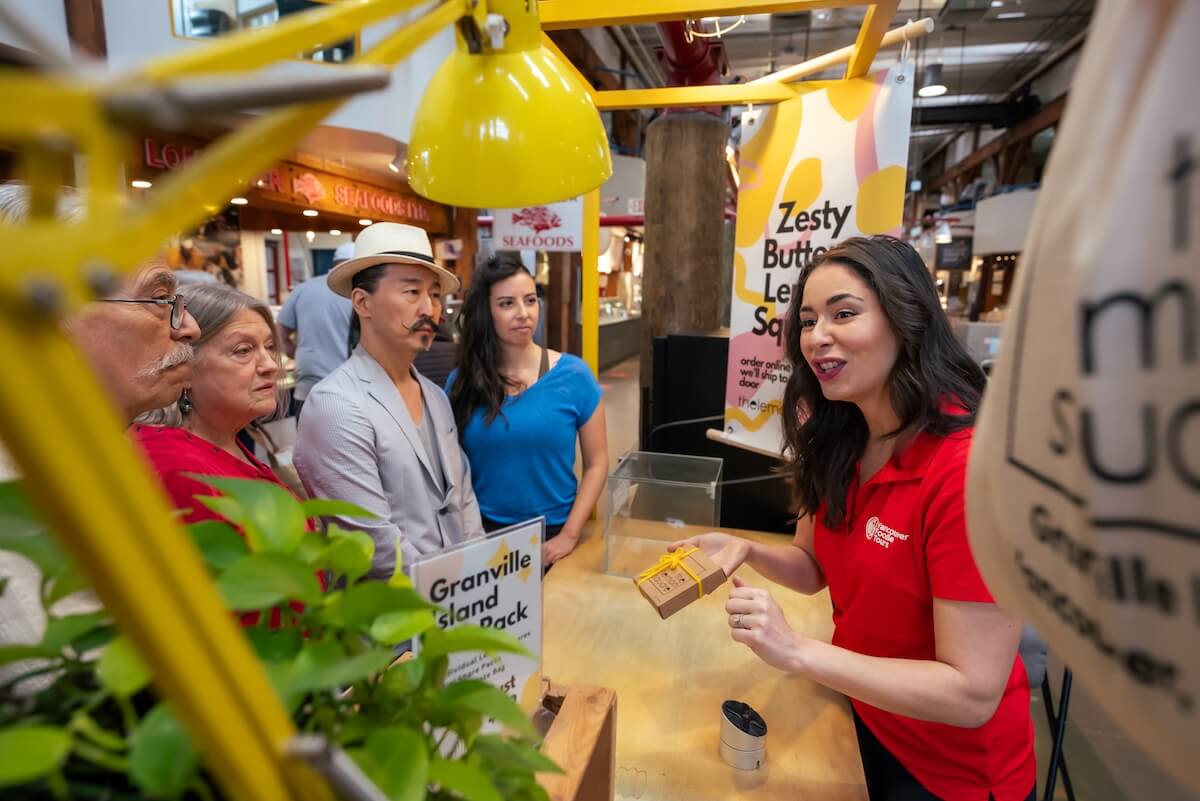
What makes the experience genuinely valuable for first-time visitors is the structure: it is not a restaurant crawl or a tourist checklist. The guides are knowledgeable, the vendor stops are curated around excellent local producers, and the format orients you to Vancouver’s food culture rather than just its food. The most popular tour moves through Granville Island Public Market with stops at artisan vendors and tastings that illuminate what makes Vancouver’s culinary scene distinctive. Private options are available for couples, families, and small groups wanting a fully customized format.
Tours run two to three hours and accommodate all dietary needs as standard.
Book or enquire: info@foodietours.ca | Available year-round
Granville Island Public Market
Even without a guided tour, the Granville Island Public Market deserves at least one unhurried visit. Open daily from 9am to 7pm, the market is home to dozens of permanent vendors: Pacific salmon and spot prawns at the fishmonger counters, artisan cheese, European-style bakeries, local charcuterie, BC honey and jam producers, and prepared food stalls representing cuisines from across Asia, the Mediterranean, and the Pacific Northwest. Arrive before noon for the best selection; a weekend morning visit combines full vendor operations with a lively market atmosphere.
Dine Out Vancouver (January–February)
If your visit falls in January or February, Dine Out Vancouver is Canada’s largest food and drink festival and one of the best specific reasons to visit in the off-season. Running for approximately three weeks each year, it features fixed-price menus from hundreds of participating restaurants across four price tiers, alongside guided food tours, chef collaborations, cooking classes, and a street food market at the Vancouver Art Gallery plaza. Higher-tier menus at Michelin-recognized restaurants typically sell out within days of announcement — book early.
Sushi in Vancouver
Vancouver’s sushi culture has its own chapter in the city’s food story. The California roll was invented in Vancouver at Tojo’s on Broadway — Tojo’s remains a city institution. Miku Restaurant downtown is widely credited as the birthplace of North American aburi sushi (flame-seared nigiri). For accessible daily dining, Richmond’s concentration of sushi restaurants rivals anything outside Japan.
Michelin-Recognized Restaurants
Vancouver received its first MICHELIN Guide recognition in 2022. Highlights include Published on Main (one Michelin star, Pacific Northwest tasting menu), Botanist at the Fairmont Pacific Rim (Michelin-recognized kitchen alongside one of the best cocktail programs in the world), and PiDGin in Gastown (Korean-Japanese fusion with a natural wine list). Reservations at all starred restaurants require advance booking.
Indigenous Cuisine
Salmon n’ Bannock Bistro on Broadway is Vancouver’s only Indigenous-owned restaurant, serving updated traditional dishes: land-to-table game meats, house-made bannock, and locally sourced Pacific seafood. A genuinely meaningful dining experience that most visitors do not know to look for.
Craft Beer and Distilleries
Mount Pleasant and Brewery Creek have become one of Canada’s densest concentrations of craft breweries. Parallel 49, Strange Fellows, Brassneck, and 33 Acres Brewing all operate taprooms open to the public. On Granville Island, the Artisan Sake Maker at Railspur Alley is the only sake brewery in Canada and offers private tasting events for small groups.
7. Outdoor Adventures in Vancouver

Vancouver’s geography — ocean, mountains, and old-growth forest within minutes of the city centre — gives it an outdoor range that most major cities simply cannot match.
Cycling the Seawall
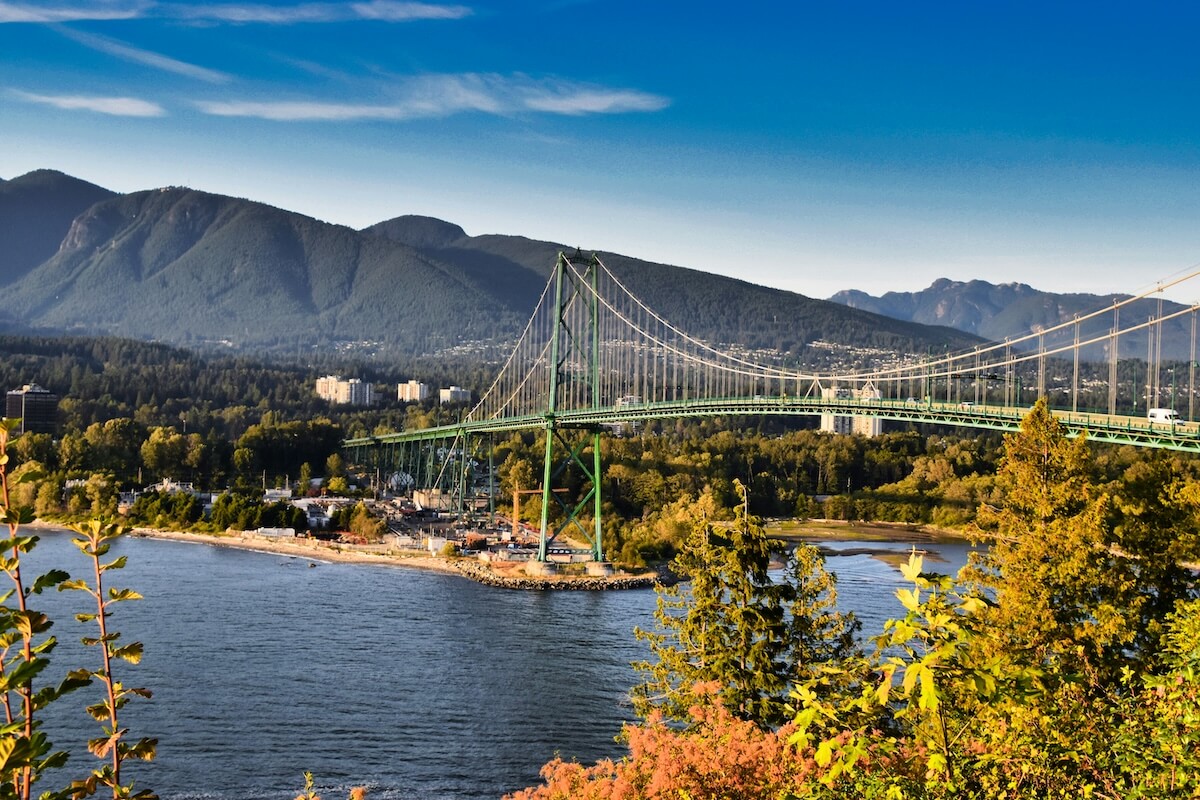
The Stanley Park loop of the Seawall is the single most universally recommended activity in Vancouver. The 8.8-kilometre park ring passes the Lions Gate Bridge viewpoint, English Bay, Third Beach, and the Brockton Point Totem Poles, with North Shore mountains and downtown skyline in view for most of the route. Cycle rentals are available near the park entrance. Following the Seawall beyond Stanley Park through to Granville Island extends the experience significantly.
Sea Kayaking at Deep Cove
Deep Cove in North Vancouver — roughly 30 minutes from downtown — is a harbour town with boutique shops, cafés, and access to some of the most scenic kayaking near the city. The Deep Cove Kayak Centre offers guided tours and rentals for paddling into Indian Arm, a fjord framed by mountains. No prior experience required for beginner tours. The Quarry Rock hike above the village is widely considered the best value-per-effort hike in Greater Vancouver.
Hiking the North Shore Mountains
Three mountain parks sit within 30 to 45 minutes of downtown. Grouse Mountain offers gondola access to summit hiking, a wildlife refuge with grizzly bears, Lumberjack shows, a skating pond in winter, and 33 ski and snowboard runs across four chairlifts. Cypress Provincial Park has the best access to backcountry routes. Mount Seymour offers more challenging intermediate terrain with less commercial development.
Lynn Canyon Park
Less than 10 miles northeast of downtown, Lynn Canyon Park delivers old-growth forest, a suspension bridge over the canyon, and trails alongside the river — all at no cost. A strong half-day option, particularly for visitors who want the North Shore forest experience without the Capilano admission fee.
Whale Watching
May through September is prime whale-watching season off the BC coast. Wild Whales Vancouver and Prince of Whales are among the most recommended operators, running tours from Granville Island with regular sightings of orcas, humpbacks, minke whales, and grey whales. Tours run three to four hours; waterproof layers recommended regardless of the forecast.
8. Day Trips from Vancouver
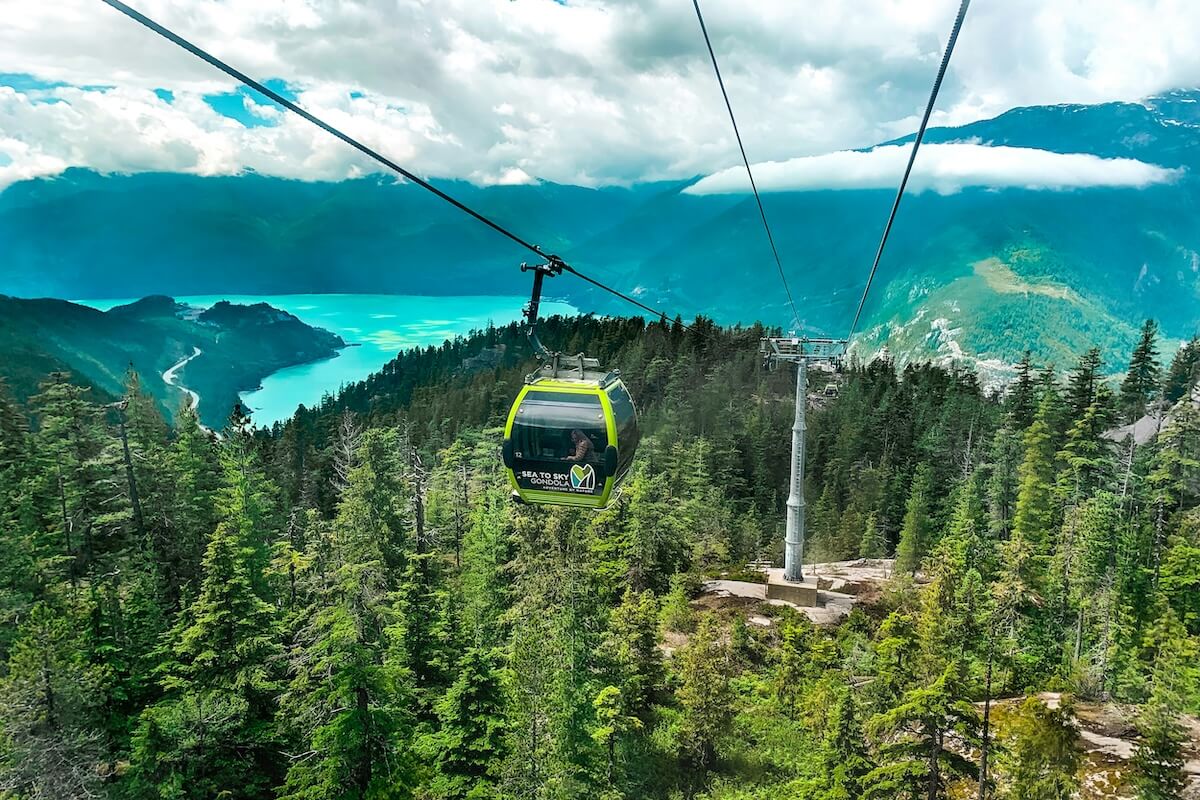
Whistler — 120 kilometres north on the Sea-to-Sky Highway, Whistler is one of the world’s premier mountain resort towns. In summer: hiking, mountain biking, and the PEAK 2 PEAK Gondola. In winter: North America’s largest combined ski and snowboard terrain. The drive through Howe Sound and past Shannon Falls is worth the trip independently.
Victoria and Vancouver Island — A 90-minute BC Ferries crossing from Tsawwassen brings you to Swartz Bay near Victoria. Butchart Gardens — 55 acres of formal themed gardens in a former limestone quarry, operating since 1904 — is the standout attraction. Victoria’s Inner Harbour, the BC Legislature buildings, and the city’s food scene make it a complete weekend destination. Reservations on BC Ferries are strongly recommended, especially during long weekends.
Bowen Island — A 20-minute ferry from Horseshoe Bay in West Vancouver. Hiking to Dorman Point, exploring the village, and returning on the evening sailing makes for a simple, high-impact day out. The ferry journey itself is part of the experience.
Steveston Village, Richmond — A historic fishing village at the mouth of the Fraser River with a 75-acre waterfront park, a restored cannery museum, and working docks where you can buy freshly caught seafood directly from fishing boats in season. A genuine local experience that most visitors miss.
Fraser Valley Wine Country — An hour east of Vancouver, over 50 wineries alongside farm stands and artisan food producers. Self-guided driving tours work well; guided day tours from the city are also available.
9. Practical Tips for Visiting Vancouver
Book popular experiences in advance. Top food tours, Michelin-recognized restaurants, whale-watching departures, and outdoor activities fill well ahead of arrival. Booking when you plan the trip, not when you arrive, is the standard approach.
Use TransLink for city travel; rent a car for day trips. The SkyTrain connects the airport, downtown, and most key neighbourhoods. The SeaBus to Lonsdale Quay connects to North Shore bus routes. Combining SkyTrain with the Mobi bike share network covers virtually every city itinerary. Driving downtown means expensive and limited parking; save car rental for Whistler, Victoria, or the Fraser Valley.
Pack layers and a waterproof jacket. Even in summer, coastal weather shifts quickly. A warm morning and a rainy afternoon is common enough that packing accordingly is simply practical.
Tipping follows North American norms. Restaurants typically expect 15 to 20 percent. Guides who provide a full experience are customarily tipped at the higher end of that range.
Budget accommodation early. Downtown Vancouver is expensive during peak season. Burnaby and Richmond offer more affordable options with easy SkyTrain access to downtown.
Currency and costs. Vancouver prices in Canadian dollars. A mid-range restaurant dinner typically runs $25–50 CAD per person before drinks; a guided food tour $90–130 CAD all-inclusive; a craft brewery pint $8–12 CAD; transit roughly $3–4 CAD per trip with a Compass Card.
10. Frequently Asked Questions
What is the best time of year to visit Vancouver?
June through September for warm weather and full access to outdoor activities. Late March to mid-April for cherry blossoms. January and February for Dine Out Vancouver and skiing on the North Shore.
How many days do I need in Vancouver?
Three days covers the major landmarks — Stanley Park, Granville Island, Gastown, and one North Shore excursion. Five to seven days allows a more relaxed pace including a Whistler or Victoria day trip and proper exploration of the food scene.
Working with less time? Our 48 hours in Vancouver itinerary shows how to fit the essentials into a single weekend.
Is Vancouver good for food tourists?
It is one of the best food cities in the world for culinary tourism — particularly for visitors interested in Pacific Northwest cuisine, Asian food culture, and farm-to-table dining. Vancouver Foodie Tours (foodietours.ca) is the most efficient way to orient yourself in the food scene on day one.
What is Dine Out Vancouver?
Canada’s largest annual food and drink festival, running approximately three weeks each January and February. Hundreds of restaurants offer fixed-price multi-course menus at four price tiers, alongside guided tours, chef events, and a street food market. One of the best specific reasons to visit Vancouver in winter.
What are the best free things to do in Vancouver?
The Stanley Park Seawall (8.8 km of waterfront walking and cycling, free to enter), Lynn Canyon Park (free suspension bridge and forest trails), English Bay Beach, Queen Elizabeth Park’s rose and quarry gardens, and exploring the city’s neighbourhoods on foot. The Granville Island Public Market is free to enter; the spending happens once you are inside.
Is there a free shuttle to Capilano Suspension Bridge Park?
Yes. The park operates free shuttle services from several pickup points in downtown Vancouver. Check the Capilano Suspension Bridge Park website for the current schedule and departure locations.
Is Vancouver safe for tourists?
Consistently ranked among the safest major cities in the world. The tourist-facing neighbourhoods — Gastown, Yaletown, Granville Island, Kitsilano, and the West End — are safe to walk at any hour. Standard urban precautions apply in the Downtown Eastside area.
Ready to Plan Your Vancouver Trip?

Vancouver rewards visitors who come with a plan — but it also rewards those who leave space to be surprised. A detour through Granville Island on a Tuesday afternoon, a conversation with a fishmonger about the morning’s catch, a glass of BC wine at a waterfront patio as the mountains go blue at dusk: the best moments in this city are often the unscheduled ones.
If you want to start with the experience most likely to orient you to Vancouver’s food culture and leave you with a personal list of places to return to, Vancouver Foodie Tours is the most consistently excellent starting point on this list. With over 75,000 guests served, Forbes recognition, and a format built specifically to make the city’s culinary scene genuinely accessible, it is the option that most reliably delivers on its promise.
No Vancouver trip is complete without time outside – see our full guide to outdoor activities in Vancouver for beaches, trails, and water sports to build into your itinerary.